

Maximum Allowable Concentration—universally abbreviated as MAC—is one of the most consequential concepts in the history of occupational health. At its simplest, MAC defines the maximum concentration of a hazardous substance (gas, vapor, dust, or aerosol) in workplace air to which a worker may be exposed without suffering adverse health effects. Whether expressed in milligrams per cubic meter (mg/m³) or parts per million (ppm), the MAC serves as a benchmark for safe working conditions. It informs the design of ventilation systems, guides the selection of personal protective equipment, triggers medical surveillance programs, and provides the legal backbone for workplace safety regulations across the globe. Time-weighted average limits, short-term exposure limits, and ceiling values—all of which appear in modern occupational exposure standards—derive their fundamental logic from the MAC principle.
Yet despite its universal importance, the MAC is not a monolithic or universally defined standard. Different nations have developed different philosophies for setting these limits, reflecting divergent scientific traditions, political priorities, and underlying assumptions about human physiology and toxicology. Among these traditions, the Soviet approach stands out as both scientifically distinctive and historically influential. This article traces the origins, scientific principles, global influence, and lasting legacy of the Soviet Maximum Allowable Concentration system—a system that, though conceived behind the Iron Curtain, shaped how the entire world thinks about the safe limits of chemical exposure.
1. The Importance of Maximum Allowable Concentration
The need for exposure limits arises from a simple but profound observation: hazardous substances in the workplace cause disease. Before the systematic development of occupational exposure limits, workers in industries ranging from mining and metallurgy to chemical manufacturing and textiles suffered from predictable, often severe, illnesses caused by prolonged exposure to toxic agents. Silicosis among miners, lead poisoning among battery workers, and benzene-induced leukemia among chemical workers were not merely individual tragedies but systemic failures of industrial hygiene.
The MAC provides a preventive tool. Rather than waiting for disease to manifest and then treating its consequences, the MAC establishes a threshold below which exposure is presumed safe. As the FEMA guidelines note, properly set exposure limits are designed to protect healthy adults over a full working lifetime of up to 40 years. This preventive orientation distinguishes the MAC from purely clinical or therapeutic approaches to occupational health. It shifts the burden of proof: instead of asking whether a given exposure has caused harm, regulators ask whether exposure exceeds the established safe limit.
The importance of the MAC extends beyond individual worker protection. In aggregate, systematic exposure limits have driven fundamental changes in industrial design and engineering. The requirement to maintain airborne concentrations below specified MAC values has spurred the development of closed chemical processing systems, improved local exhaust ventilation, automated material handling, and real-time air monitoring technologies. These engineering controls, implemented to comply with MAC regulations, have in many cases reduced not only workplace exposures but also environmental releases, benefiting surrounding communities.
Moreover, MACs serve as essential tools for regulatory enforcement and international harmonization. The International Labour Organization (ILO), the World Health Organization (WHO), and national regulatory bodies worldwide rely on MAC-type standards to benchmark acceptable exposure levels, guide inspections, and adjudicate compensation claims for occupationally acquired diseases.
2. Pioneers of the Soviet MAC System
In Russian language, the Maximum Allowable Concentration is known as Предельно допустимая концентрация (ПДК), abbreviated as PDK (or sometimes as PDK). The Soviet approach to Maximum Allowable Concentrations did not emerge in a vacuum. Its intellectual roots run deep into nineteenth-century Russian and European hygiene science, and its development was shaped by a distinctive group of scientists who combined rigorous experimental toxicology with a highly precautionary philosophy toward human exposure.
2.1. Early Foundations: The Pre-Soviet Era
Before the 1917 Revolution, Russia possessed a small but distinguished tradition in hygiene and occupational medicine. Grigorii Khlopin (1863–1929), a professor at the universities of Iur’ev, Odessa, and St. Petersburg, conducted pioneering work on water supply, sanitation, housing construction, food services, and occupational hygiene. His broad interests established a comprehensive approach to environmental health that would later inform Soviet hygiene standards. Dmitriy Nikol’skiy, who taught some of the first courses in occupational hygiene in Saint Petersburg in the 1890s and proposed in 1910 that occupational hygiene be made a compulsory subject in all medical faculties, laid the educational groundwork for the field.
2.2. Sergei Ilich Kaplun: Organizer of Soviet Labor Hygiene
The immediate post-revolutionary period saw the emergence of Sergei Ilich Kaplun as the central figure in organizing Soviet occupational health. Kaplun was the first in the USSR to organize scientific and practical activities in the field of labor sanitation. As the first industrial-sanitation inspector for the People’s Commissariat of Public Health, he exercised enormous influence over the future direction of the field in the USSR. Under his leadership, the institutional framework necessary for systematic standard-setting began to take shape.
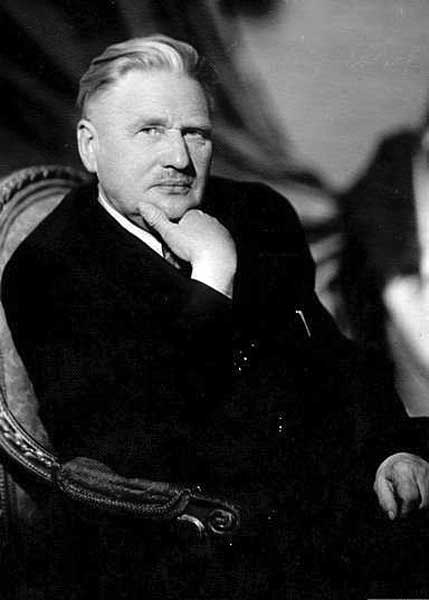
2.3. Avgust Andreevich Letavet: The Architect of Soviet MAC Methodology
No figure is more closely associated with the Soviet MAC system than Avgust Andreevich Letavet (1893–1984). A physician and hygienist of extraordinary range, Letavet’s research encompassed general and specific labor hygiene, industrial microclimate, the prevention of silicosis, and industrial toxicology. He helped prepare the first Soviet legislation on occupational hygiene for industrial workers and guided research on the mechanism of action and clinical aspects of radiation injury.
Letavet articulated the core philosophical principle that distinguished Soviet MACs from Western exposure limits: Soviet MAC values were based on concentrations that produce no pathological change or functional disruption whatsoever. In his formulation, the MAC was defined as the concentration of gases, vapors, or other substances encountered in working environments such that daily working in these environments will not result in any deviation in the normal state of the organism, nor result in disease. The emphasis on “any deviation” is crucial—and radical. Where Western toxicology typically focused on preventing overt disease or measurable adverse effects, Letavet’s approach sought to prevent even subclinical physiological changes.
He won the Stalin Prize, Second Degree (Сталинская премия II степени), in 1949, and Lenin Prize in 1963.
2.4. Nikolai Vasilyevich Lazarev: Toxicological Innovator
Nikolai Vasilyevich Lazarev made foundational contributions to both the theory and practice of toxicity testing. He was among the first scientists worldwide to study the biomedical consequences of chemical accidents and the problems of environmental toxicology. Lazarev’s research emphasized that nonspecific physiological responses were critically important in determining hygienic standards, a view that aligned with the broader Soviet focus on functional rather than pathological endpoints.
2.5. The Role of Pavlovian Neurophysiology
Perhaps the most distinctive intellectual influence on Soviet MAC methodology came from the neurophysiology of Ivan Pavlov. Soviet toxicologists, building on Pavlov’s concepts, proposed that autonomic (neurovegetative) changes—alterations in heart rate, respiration, nervous reflexes, and other automatic functions—were early manifestations of toxicity that should be prevented, not merely tolerated.
The standard methods used in Soviet toxicity testing included observational techniques, unconditioned reflex behavior studies, and conditioned reflex behavior studies—all designed to detect the earliest possible signs of physiological disruption. Where Western toxicologists might have looked for histopathological changes (tissue damage visible under a microscope) or clinical symptoms of disease, Soviet toxicologists looked for functional shifts in nervous system activity that preceded any structural damage. This approach reflects a fundamentally different philosophy about the relationship between exposure and health: for the Soviets, the goal was not merely to prevent disease but to preserve the organism’s normal functional state in its entirety.
2.6. Institutionalization: The MAC Committee
By the early 1950s, following the establishment of the official MAC committee, the Soviet standard-setting process had become systematic and formalized. The committee’s work was grounded in animal studies designed to identify the maximum ineffective concentration—the highest exposure level at which no functional or physiological change could be detected. This practice carried the implicit assumption that humans are at least as sensitive as the experimental animals used in testing. In practice, this conservative assumption often produced MAC values that were substantially lower than those recommended by Western authorities.
3. Global Influence: The East-West Divide and Its Legacy
The Soviet MAC system did not develop in isolation from the West, nor did it remain confined to Soviet borders. Its influence rippled outward through international organizations, shaped regulatory systems in allied nations, and—through sustained comparison and critique—indirectly influenced the evolution of Western standards as well.
3.1. The Divergent Philosophies of East and West
By the 1920s and 1930s, the Soviet Union and the United States had emerged as the leading nations in occupational health standard research. Yet their methodological approaches diverged sharply.
In the United States, the American Conference of Governmental Industrial Hygienists (ACGIH) developed the Threshold Limit Value (TLV) system. TLVs were defined as airborne concentrations to which nearly all workers could be repeatedly exposed without adverse health effects. The ACGIH emphasized that TLVs should be used as guidelines in the control of health hazards, not as fine lines between safe and dangerous concentrations, nor as relative indices of toxicity. American hygienists introduced a flexible concept, distinguishing between time-weighted average limits (designed for daily eight-hour exposures) and short-term exposure limits for brief excursions.
In contrast, Soviet authorities established MACs as strict ceiling values—maximum concentrations that were never to be exceeded at any moment during the workday. While American hygienists permitted short-term excursions above the TWA limit under specified conditions (for example, STEL values up to three times the TWA for limited durations), Soviet standards admitted no such flexibility.
3.2. Numerical Differences and Scientific Debate
The practical consequences of these philosophical differences were stark. A comprehensive comparison of recommended limits for 100 common contaminants showed that Soviet MACs were lower than American recommendations in 78 cases. In many instances, the differences were dramatic: for lead, manganese, and mercury, the two listings differed by factors of 10.6 and 10 times, respectively. These discrepancies reflected not merely different political priorities but genuine scientific disagreements about the nature of toxicological risk and the appropriate margin of safety.
The Joint ILO/WHO Committee on Occupational Health, meeting in 1969, acknowledged the depth of these disagreements. The Committee was unable to recommend a single set of values as international standards for more than a few toxic agents. The obstacles to harmonization included differences in the interpretation of toxicological data, the selection of critical health effects, the use of safety factors, and—most fundamentally—the definition of what constituted an “adverse” effect deserving of regulatory action.
3.3. Influence on Allied and Neighboring Nations
The Soviet MAC system exerted direct regulatory influence well beyond Soviet borders. China, whose occupational exposure standards developed during a period of close political and scientific alignment with the Soviet Union, adopted MAC definitions and methodological approaches that were essentially equivalent to their Soviet counterparts. A comparative evaluation published in PubMed confirms that Chinese MACs turned out to be similar to Russian ones because the definition of MAC and the methodic approaches to the parameter are equivalent.
Eastern European nations within the Soviet sphere of influence—including Poland, Hungary, and the German Democratic Republic—likewise developed MAC systems derived from or heavily influenced by Soviet principles. The Council for Mutual Economic Assistance (CMEA) provided a forum for coordinating standards among member states, facilitating the spread of Soviet methodological approaches across a broad geographic area.
3.4. Institutional Recognition and Critique
International organizations took note of the Soviet system, both as a source of data and as a subject of critical scrutiny. The ILO published lists of Soviet MACs, along with accompanying discussions on the problems of evaluation, as early as 1970. The WHO’s regional office maintained documentation on Soviet methods used to establish safe levels of toxic substances.
Western scientists, particularly those at the US National Institute for Occupational Safety and Health (NIOSH), conducted detailed examinations of Soviet behavioral and neurophysiological toxicity testing methods. The impetus for this examination was the recognition that significant differences existed between Soviet and American standards for allowable concentrations of chemical contaminants in workplace air. These reviews, conducted in the 1970s and 1980s, produced both admiration for the sophistication of Soviet methods and skepticism about the practical feasibility of their most stringent standards.
3.5. The Limits of International Harmonization
Efforts to unify MAC definitions and standard-setting approaches across national boundaries faced persistent obstacles. International organizations contributed to some harmonization, particularly in refining definitions and clarifying methodological principles. However, a Joint ILO/WHO Committee on Occupational Health in 1969 was unable to recommend a single set of values as international standards for more than a few toxic agents. The reasons included differences in the interpretation of toxicological data, the selection of critical health effects, the use of safety factors, and—most fundamentally—the definition of what constituted an “adverse” effect deserving of regulatory action.
4. Stringent vs. Loose Criteria: Which Is Better?
The divergence between Soviet and Western approaches raises an enduring question: is a more stringent exposure limit necessarily a better one? The answer, as is often the case in science and public policy, depends on one’s priorities and the specific context of application.
4.1. The Case for Stringency
The Soviet approach offered several compelling advantages. By basing MACs on the detection of the earliest functional changes—subtle alterations in nervous system activity, conditioned reflex behavior, or biochemical markers—Soviet toxicologists aimed to prevent any physiological disruption whatsoever. This precautionary philosophy, grounded in Pavlovian neurophysiology, provided a larger margin of safety than systems that tolerated some degree of reversible physiological change.
The identification of protective adaptational reactions—physiological responses that allow the organism to cope with low-level exposure without sustaining permanent damage—was another distinctive feature of Soviet methodology. Rather than assuming that any detectable response was acceptable, Soviet toxicologists sought to identify the threshold at which protective mechanisms themselves might become overwhelmed.
Stringent standards also provided clear, enforceable regulatory benchmarks. A strict ceiling value leaves no ambiguity about compliance, whereas time-weighted average limits with permitted excursions introduce interpretative complexity that can undermine enforcement.
4.2. The Case for Flexibility
Critics of the Soviet approach raised several concerns. Extremely stringent MACs, particularly when based on subtle functional changes of uncertain clinical significance, may be practically unattainable in many industrial settings. Standards that cannot be met may be ignored, undermining the entire regulatory enterprise.
The American TLV system’s distinction between time-weighted average limits and short-term exposure limits reflects a pragmatic recognition that workplace exposures are not uniform. Brief excursions above the TWA may occur without producing adverse health effects, provided that average exposure remains within safe bounds. This flexibility allows industries to operate efficiently while maintaining adequate worker protection.
Furthermore, the Soviet assumption that humans are as sensitive as experimental animals—or more so—may be overly conservative for some substances. Safety factors that are too large can impose enormous compliance costs without yielding proportional health benefits.
4.3. A Balanced Assessment
The available evidence suggests that neither approach is categorically superior. Stringent standards provide greater protection but may be less feasible to implement in for-profit industries where cost minimization usually overwhelms other concerns.. Flexible standards may be more practical but may leave some workers unprotected.
What is clear is that the existence of competing methodologies has been scientifically productive. The sustained comparison between Soviet and Western standards forced both sides to examine their assumptions, refine their methods, and defend their conclusions. The debate over whether functional changes should be considered adverse effects continues to shape occupational health research today.
5. How MAC Standards Improved Our Lives
The development and implementation of Maximum Allowable Concentration standards—whether of Soviet, or other origin—has produced measurable improvements in human health and well-being.
5.1. Prevention of Acute Poisoning
The earliest workplace exposure limits were set to prevent acute illness and death. Before the systematic application of MACs, workers in industries such as manufacturing, pesticide production, and chemical synthesis routinely suffered from acute poisoning episodes. The introduction of enforceable exposure limits, combined with engineering controls designed to meet those limits, dramatically reduced the incidence of acute chemical poisonings in industrialized countries.
5.2. Reduction of Chronic Disease
As toxicological knowledge advanced, exposure limits were revised downward to prevent chronic illness and subclinical health effects. The long latency of many occupational diseases—asbestos-related cancers may take decades to manifest—makes the preventive logic of the MAC system particularly important. Standards set today protect workers who will retire years or decades before any exposure-related disease might otherwise appear.
Epidemiological studies have confirmed the beneficial effects of occupational exposure legislation. Research examining the impact of workplace exposure regulations in the United Kingdom found that the introduction of legislation aimed at reducing workplace exposures coincided with a reduction in the incidence of work-related respiratory disease. These data are consistent with a beneficial effect of legislation aiming to reduce workplace exposures.
5.3. Protection of Vulnerable Populations
While MACs are designed to protect healthy adult workers, their indirect effects have benefited more vulnerable populations as well. The engineering controls and work practices implemented to meet MAC requirements often reduce environmental emissions of hazardous substances, lowering exposure levels for nearby communities, including children, the elderly, and individuals with pre-existing health conditions.
5.4. Continuous Improvement Through Research
The MAC system is not static. As toxicological knowledge advances and epidemiological data accumulate, exposure limits are revised downward. Today’s standards are substantially more protective than those of fifty years ago, reflecting both improved scientific understanding and the institutional commitment to continuous improvement that the MAC framework embodies.
The ongoing refinement of exposure limits—including the development of biological exposure indices that measure internal doses rather than merely environmental concentrations—represents the maturation of the science first systematized by the Soviet pioneers. Their insistence that the earliest functional changes matter, not merely overt disease, has found echoes in modern risk assessment practices that seek to identify thresholds for all observable adverse effects.
5.5. Global Standards and Worker Mobility
Finally, the harmonization of exposure standards across national boundaries—however incomplete—has facilitated the global mobility of workers and the international trade in manufactured goods. A worker trained in a country with stringent standards can reasonably expect comparable protection elsewhere. An exporter who complies with one country’s MAC requirements is likely to meet the standards of many others. This harmonization, though still a work in progress, represents an enduring legacy of the comparative scrutiny that Soviet and Western standards have received over the past half-century.
Conclusion
The Soviet Maximum Allowable Concentration system was neither a scientific aberration nor a merely political artifact. It was a serious, systematic, and intellectually coherent approach to occupational health that differed in important respects from Western methodologies but shared the same fundamental goal: protecting workers from the harmful effects of chemical exposures.
The Soviet emphasis on detecting the earliest functional changes, their grounding of toxicology in Pavlovian neurophysiology, their commitment to strict ceiling values rather than flexible averages, and their willingness to set limits that many Western observers considered impractically stringent—all of these features reflected a distinctive philosophy about the relationship between human physiology and environmental exposures. That philosophy, however controversial in its particulars, contributed to the global conversation about acceptable risk and appropriate standards of worker protection.
Today, as occupational health scientists grapple with new challenges—nanomaterials, endocrine-disrupting chemicals, and the health effects of low-level chronic exposures to complex mixtures—the questions that divided Soviet and Western toxicologists remain surprisingly relevant. What constitutes an adverse effect? How much functional change is acceptable before it becomes pathological? What margin of safety is adequate when the exposed population may include individuals of varying susceptibility?
The Soviet pioneers who built the MAC system did not answer these questions definitively. But they asked them rigorously, and their answers—however imperfect—shaped the science of occupational health for generations. The Maximum Allowable Concentration, born in the early twentieth century and refined across the Cold War divide, remains one of the most powerful tools ever devised for preventing occupational disease. Its hidden legacy is visible in every workplace where air is monitored, every ventilation system that operates, and every worker who returns home healthy at the end of a shift.
This article is part of a series on Soviet scientific contributions. Future installments will examine other achievements made by Soviet Science.
Leave a Reply